–
Prospect Cologne
Installation Views
Video
Works
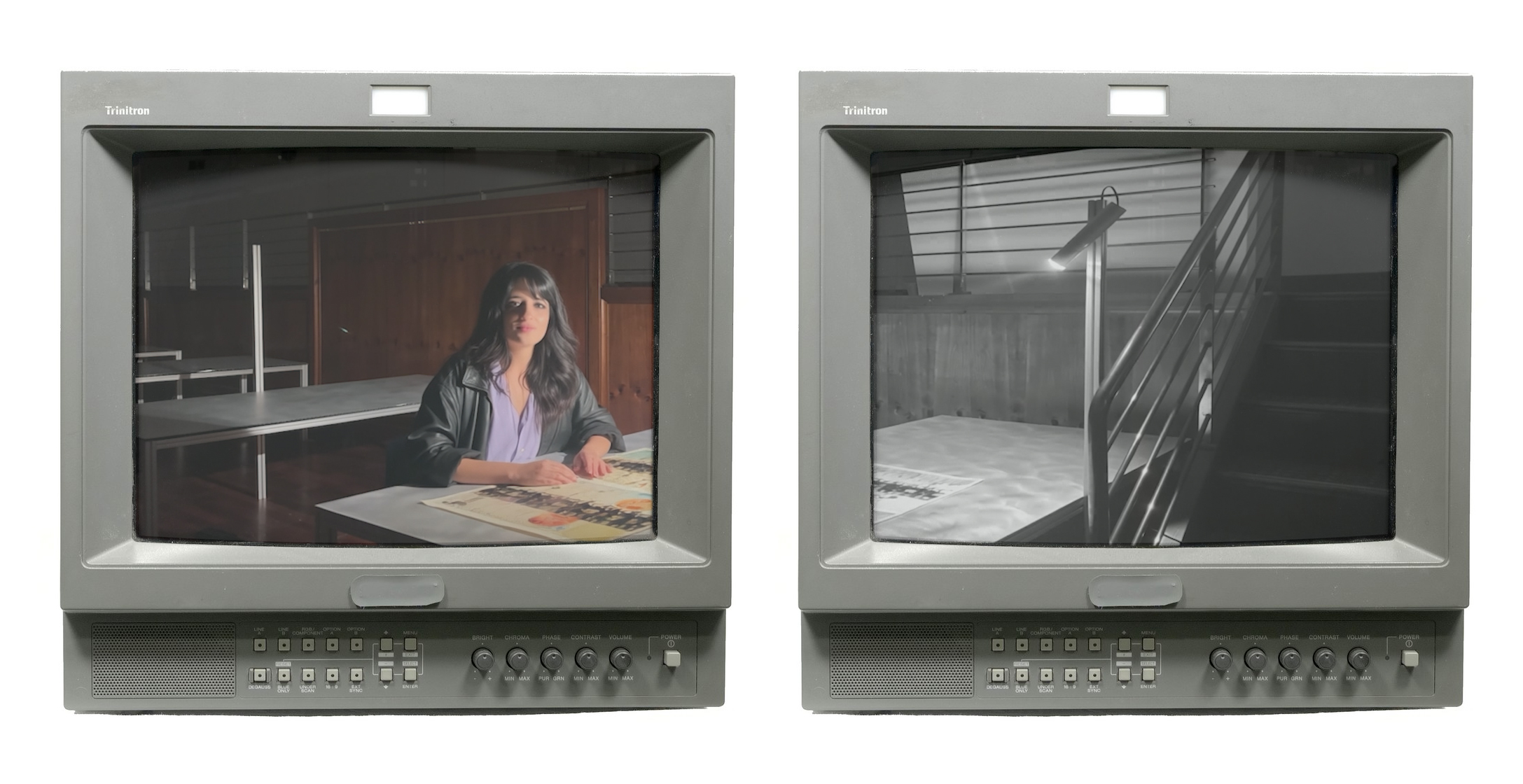
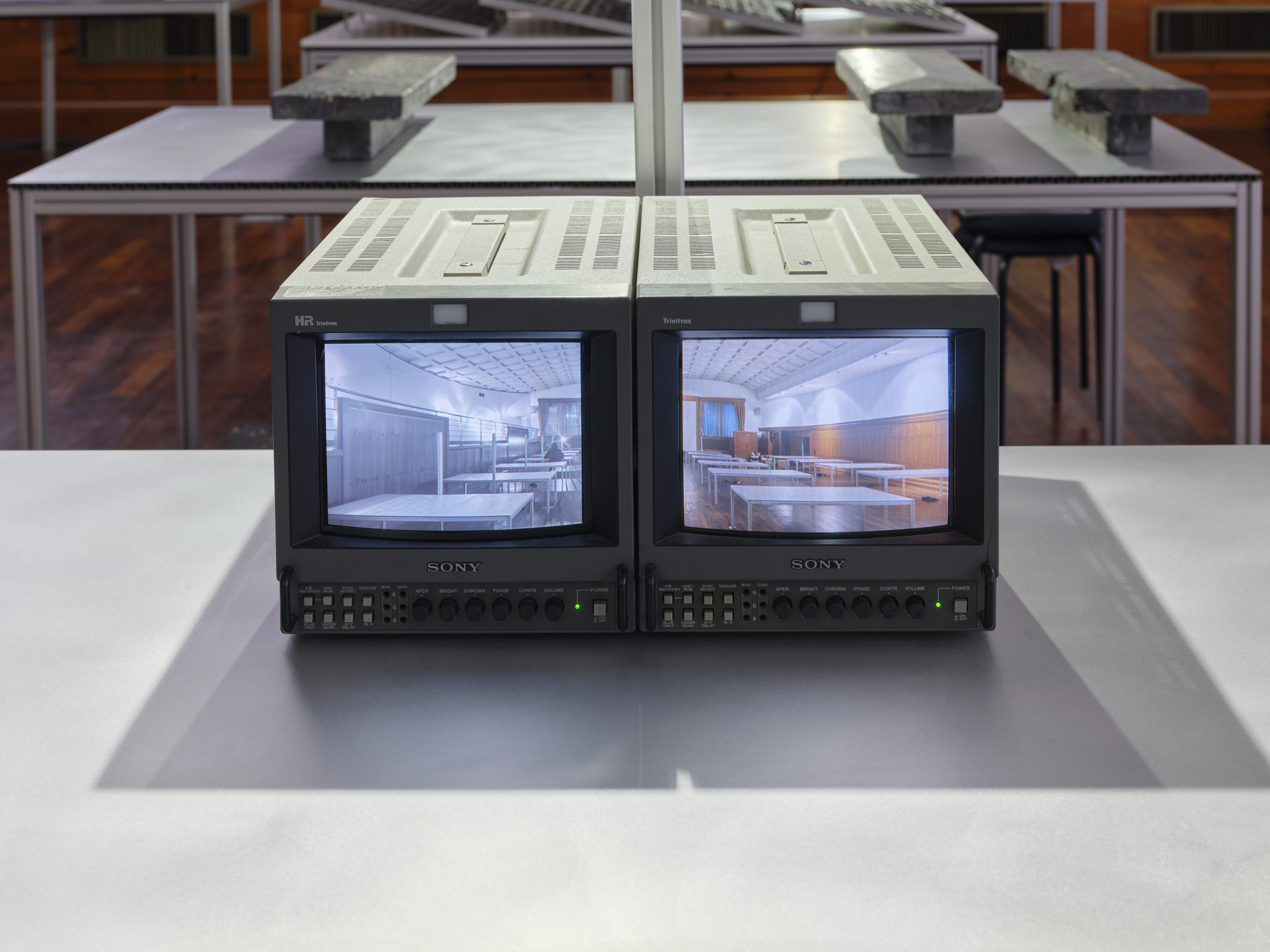
Untitled (Brief des Grafen von Diggadorf), 2026, Two channel video for two dedicated CRT monitors, color, sound 3:54 minutes (looped)
Press Release
My engagement with art is deeply indebted to my education with Christopher Williams. His method of teaching was to provide us with a number of models for art-making, without telling us how they ought to be taken up. I took them up quite directly, with equal parts devotion and suspicion. The following quote is from a text by Harun Farocki he assigned that never left me, which began to orient the video I made for Prospect:
Sieht man in einer Innenstadt einen Bettler, ein Liebespaar, eine Schlägerei – ein beliebiges deutliches Lebensbild, so war früher zu fragen: Wird hier ein Film gedreht? Heute ist zu fragen: Wird hier ein Leben gespielt, damit man sich eine Stadt vorstellen kann, in dem ein Kino vorstellbar ist, in dessen Saal vorstellbare Zuschauer sitzen und einem vorgestellten Film zusehen? Wird hier Leben gespielt, damit ein Film am Ende der langen Reihe all dieser Vorstellungen vorstellbar bleibt? Das sind schwierige Fragen. When people used to see a beggar, a couple kissing, a fight on the street, or a similarly vivid scene, they used to ask whether a film was being made. Today the question to ask would be: is life being played out here, in order that we can regard the city as being a place where a cinema is conceivable whose auditorium is filled with a conceivable audience, sitting and watching an imaginary film? Is life being played out so that at the end of this long chain of imagination movies remain imaginable?
These are difficult questions.
A few years ago I was asked for spare change on the way to work, at the Appellhofplatz U-Bahn station where I get out, and the memory of Baudelaire’s prose poem Assommons les Pauvres ! came to mind. I got a machine to make a video of this interaction, first of the poet being asked for change, and then of him and the beggar fighting. I knew I was going to make a two-channel video with CRTs, monitors I like to use because of their specific historical and institutional associations, and I spliced the video up with other, historical images of poverty that have stayed in my mind, frescoes by Giotto, photographs by Walker Evans, and films by D. W. Griffith. There is a beautiful aphorism Adorno wrote that tries to articulate an exasperation in the face of incomprehensible suffering: „There is tenderness only in the coarsest demand: that no one shall go hungry any more.“ (Original: „Zart wäre einzig das Gröbste: dass keiner mehr hungern soll.“) There is the Other as we imagine them and the Other as they are to themselves: opaque. There is the resistance we imagine we will face and the resistance we encounter through working with material, and it is always different from that which we prepare ourselves for. So I tried to tie it all up in knots: the self and the Other, the dreaming of the work and it never getting going. Baudelaire put it best in an unpublished fragment he wrote towards the end of his life: “There is no long work but that which one dares not begin. It becomes a nightmare.”