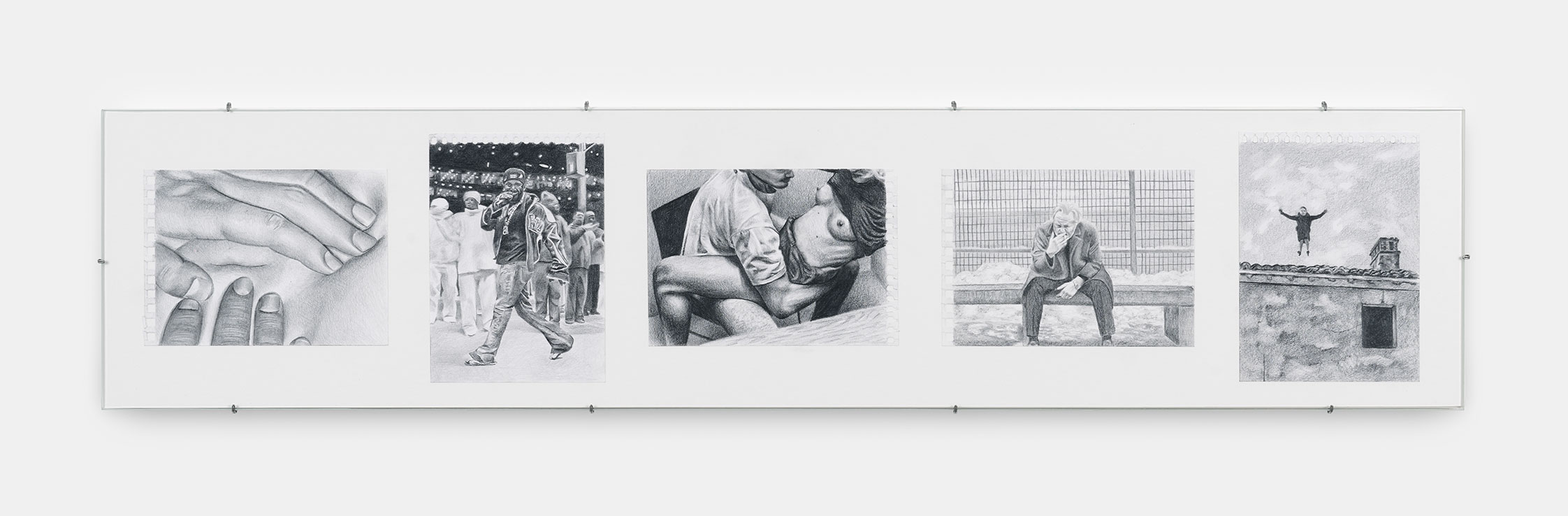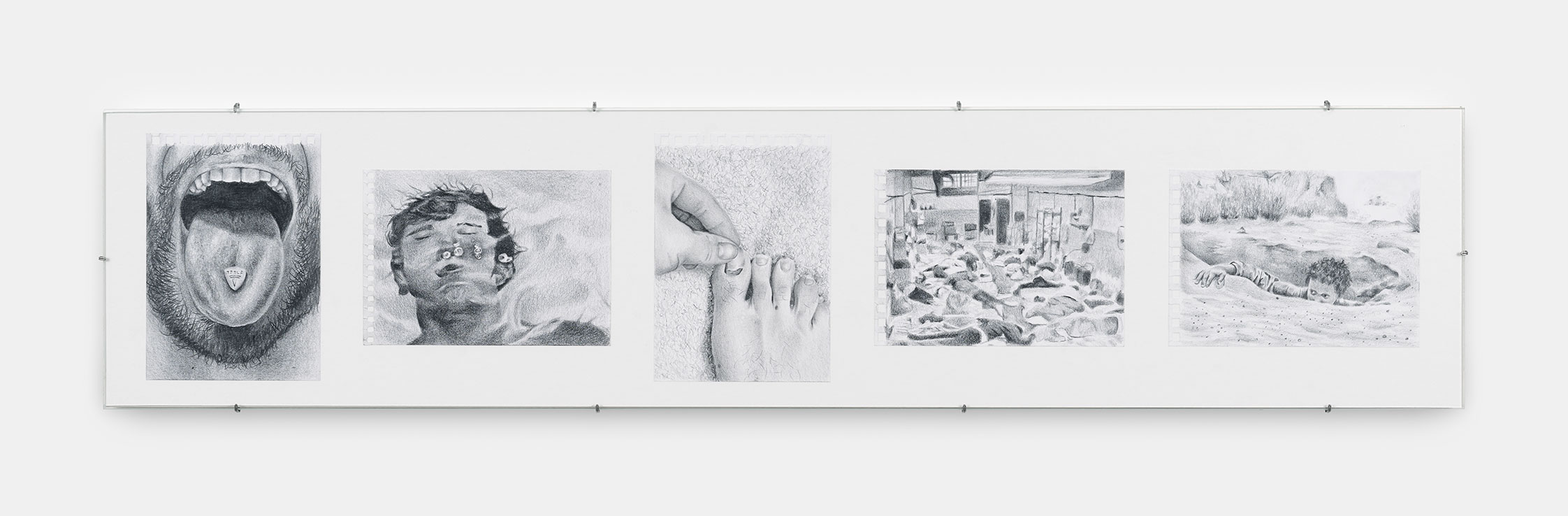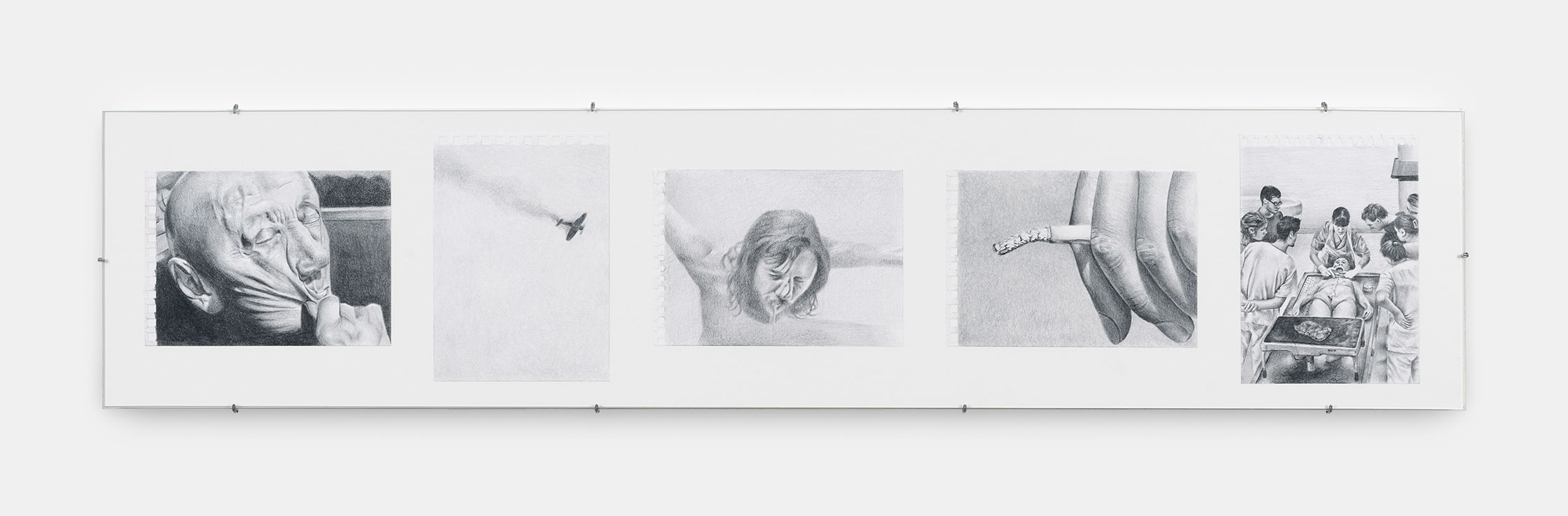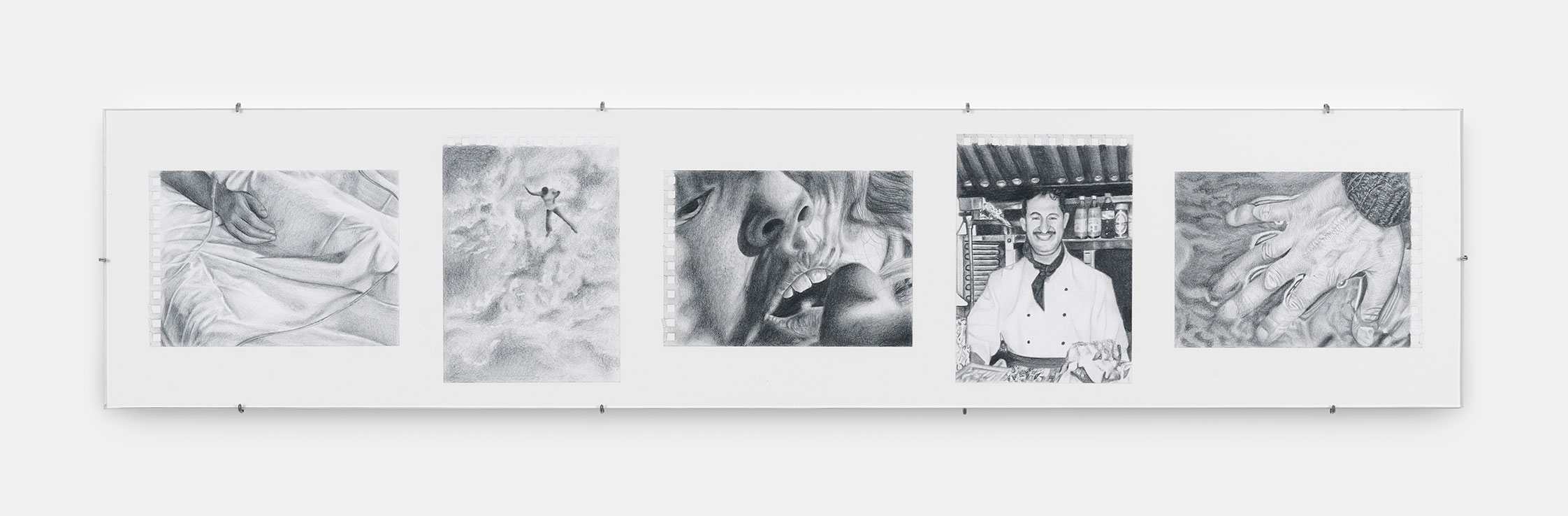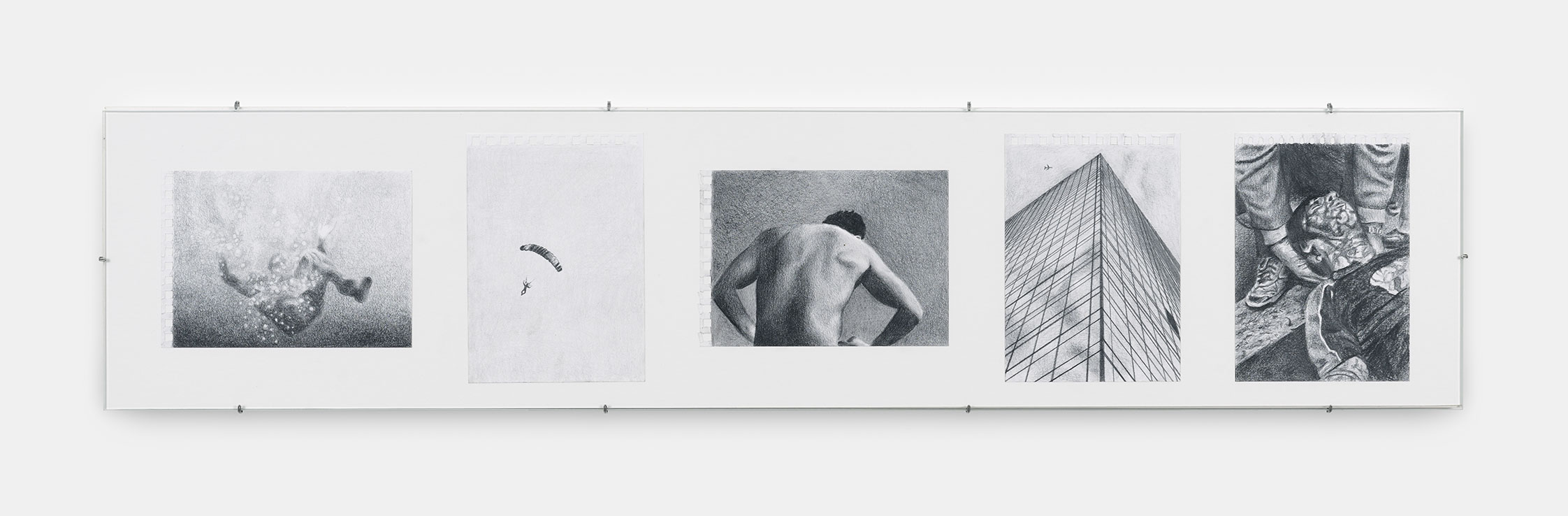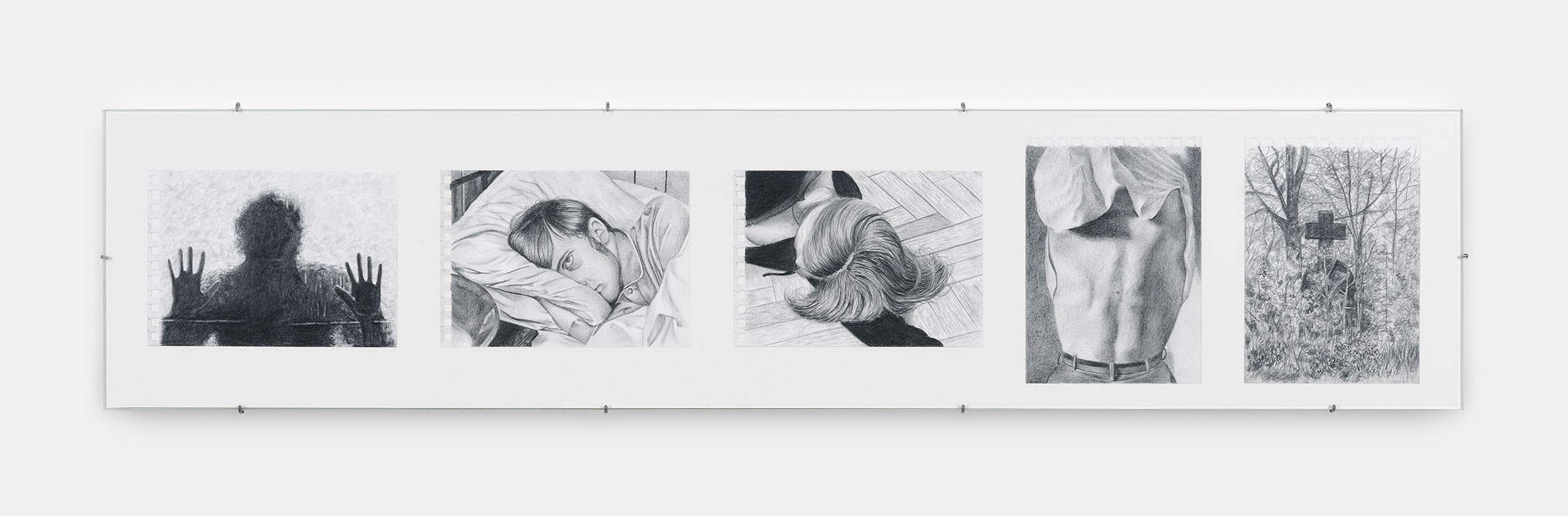
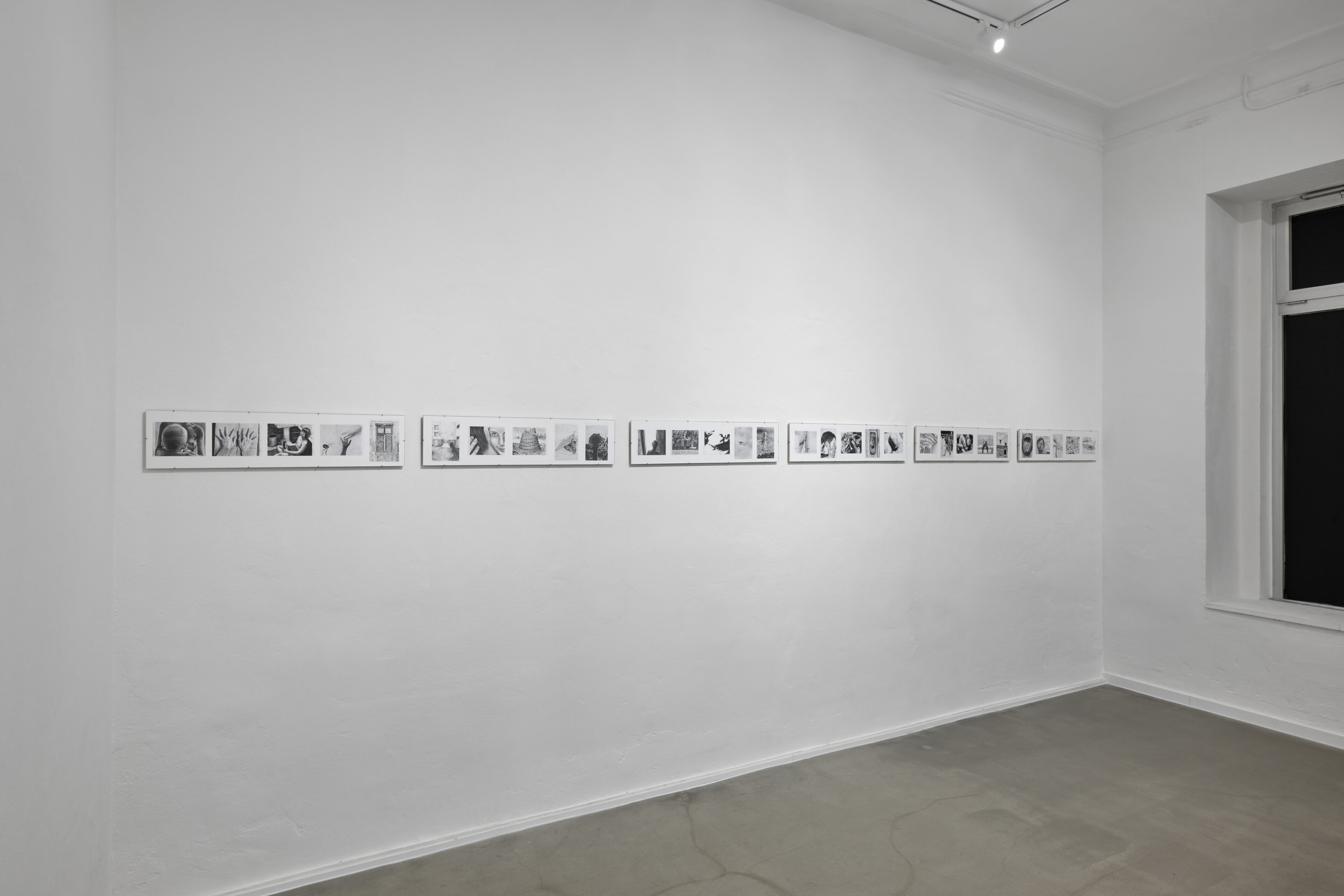
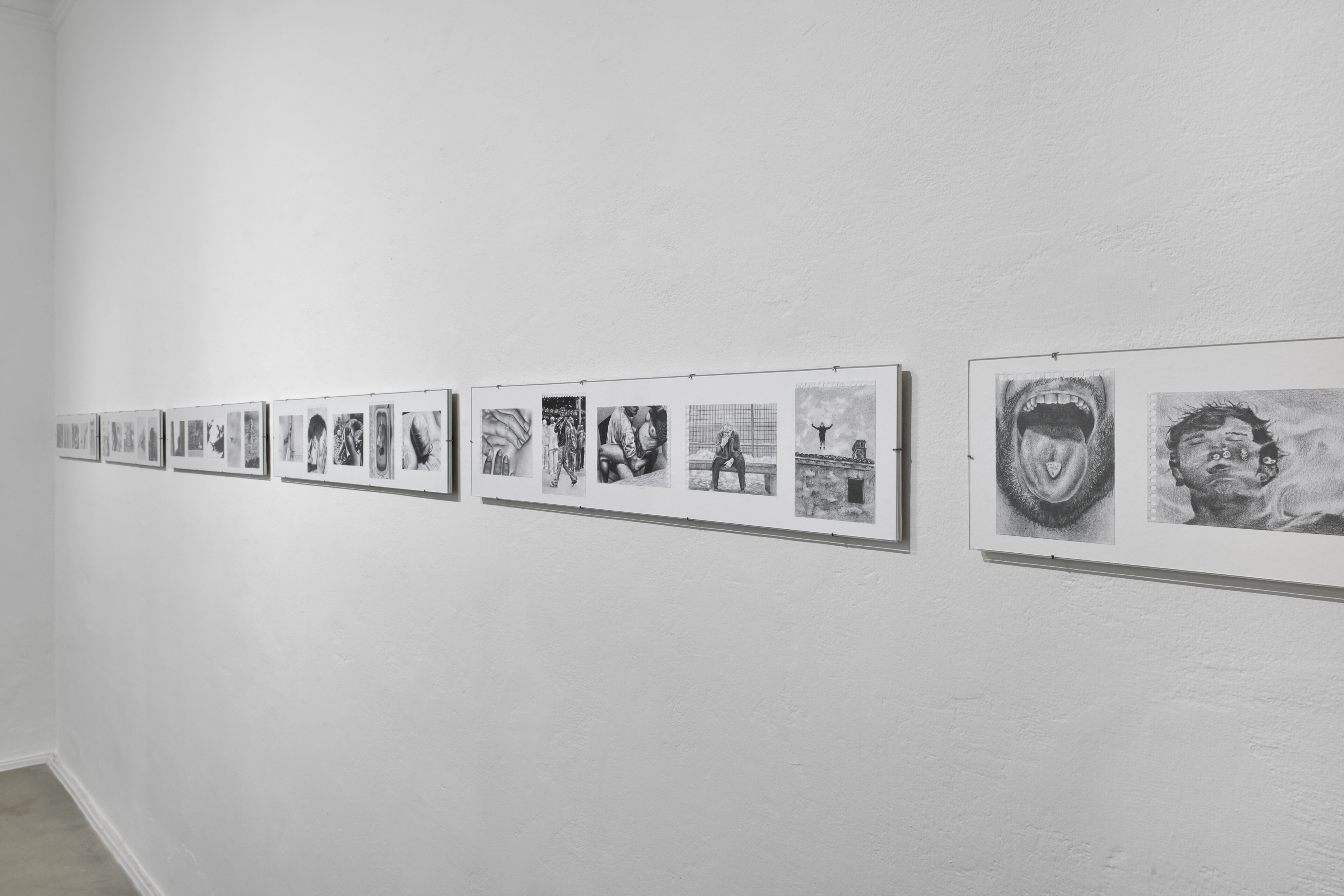
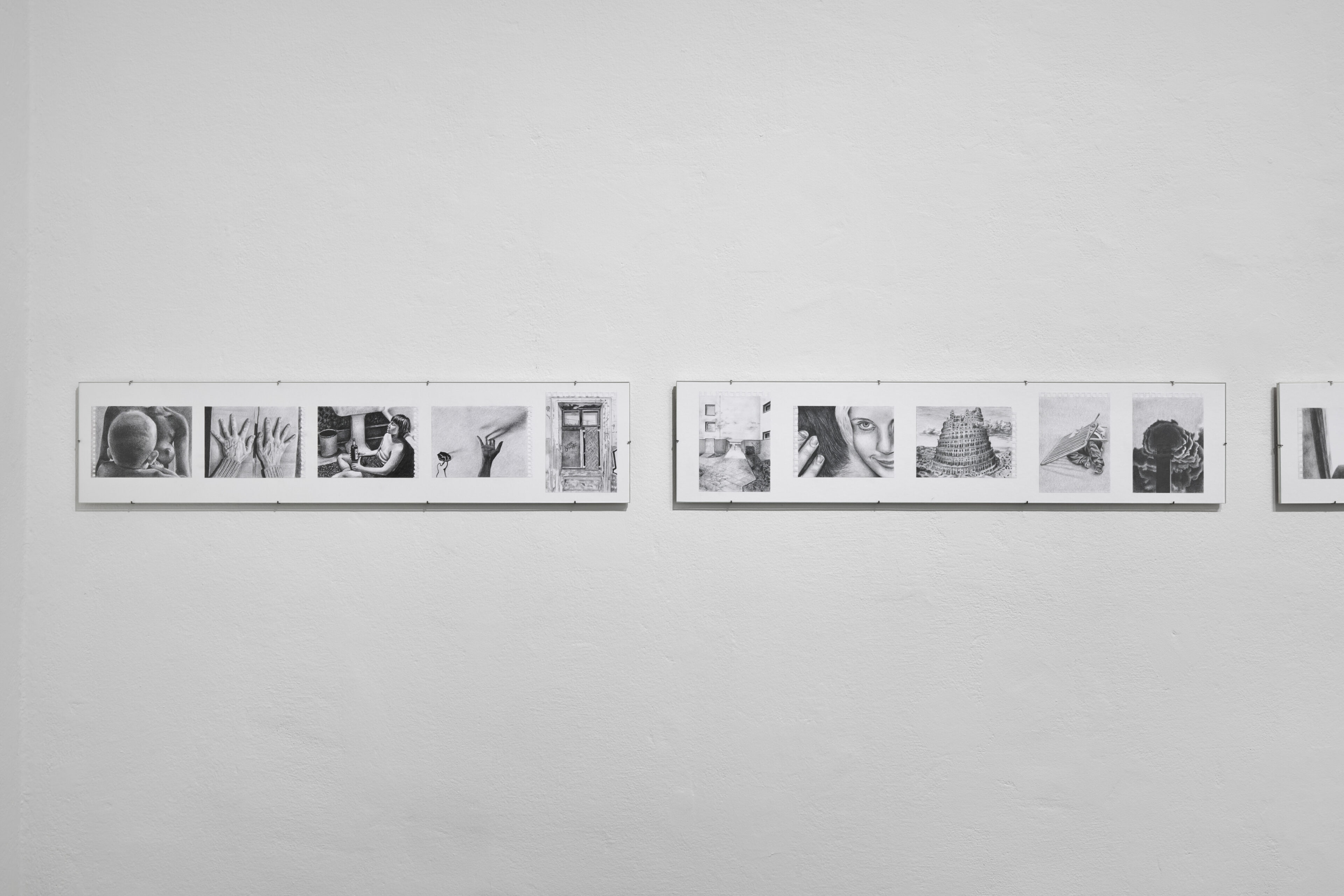
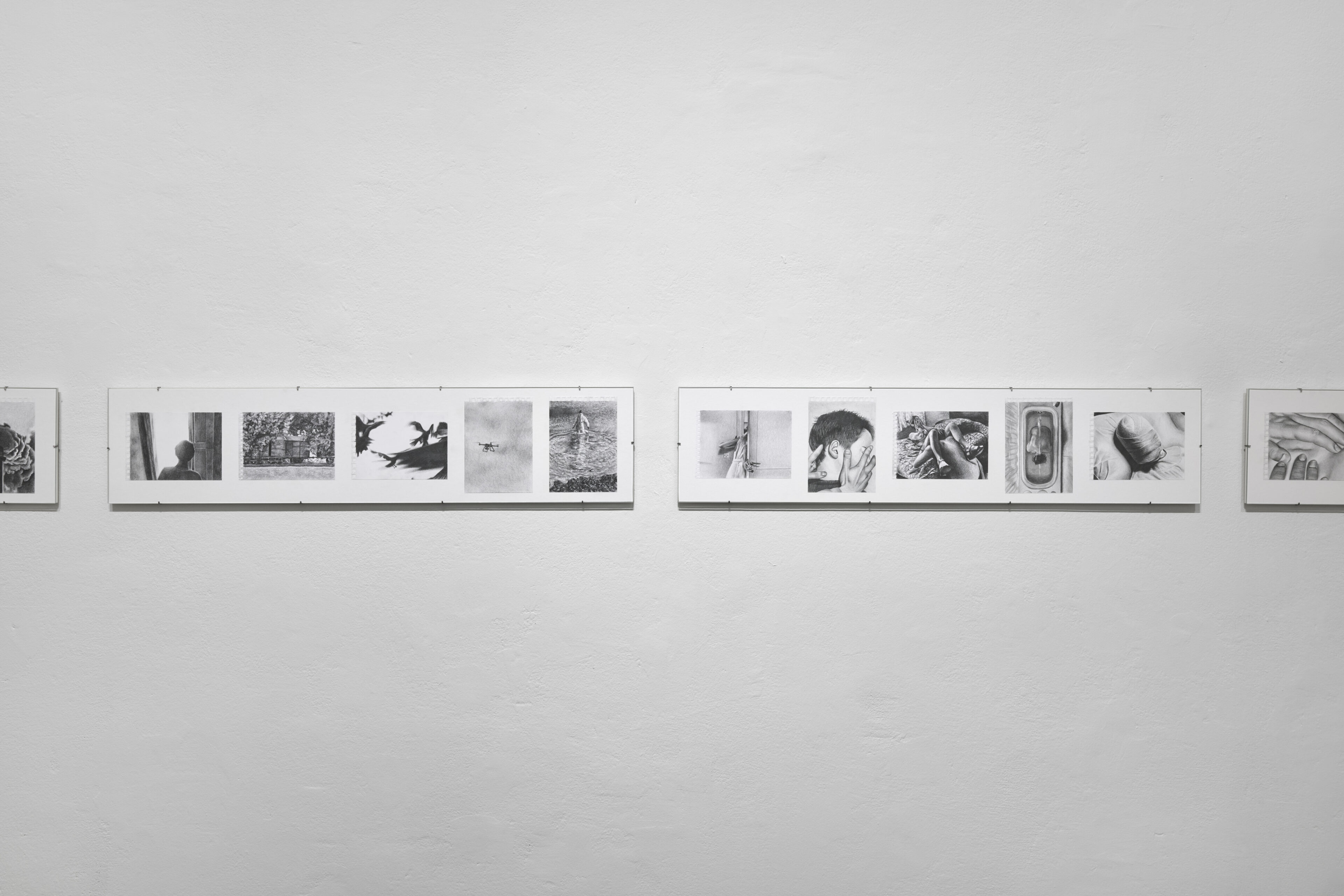
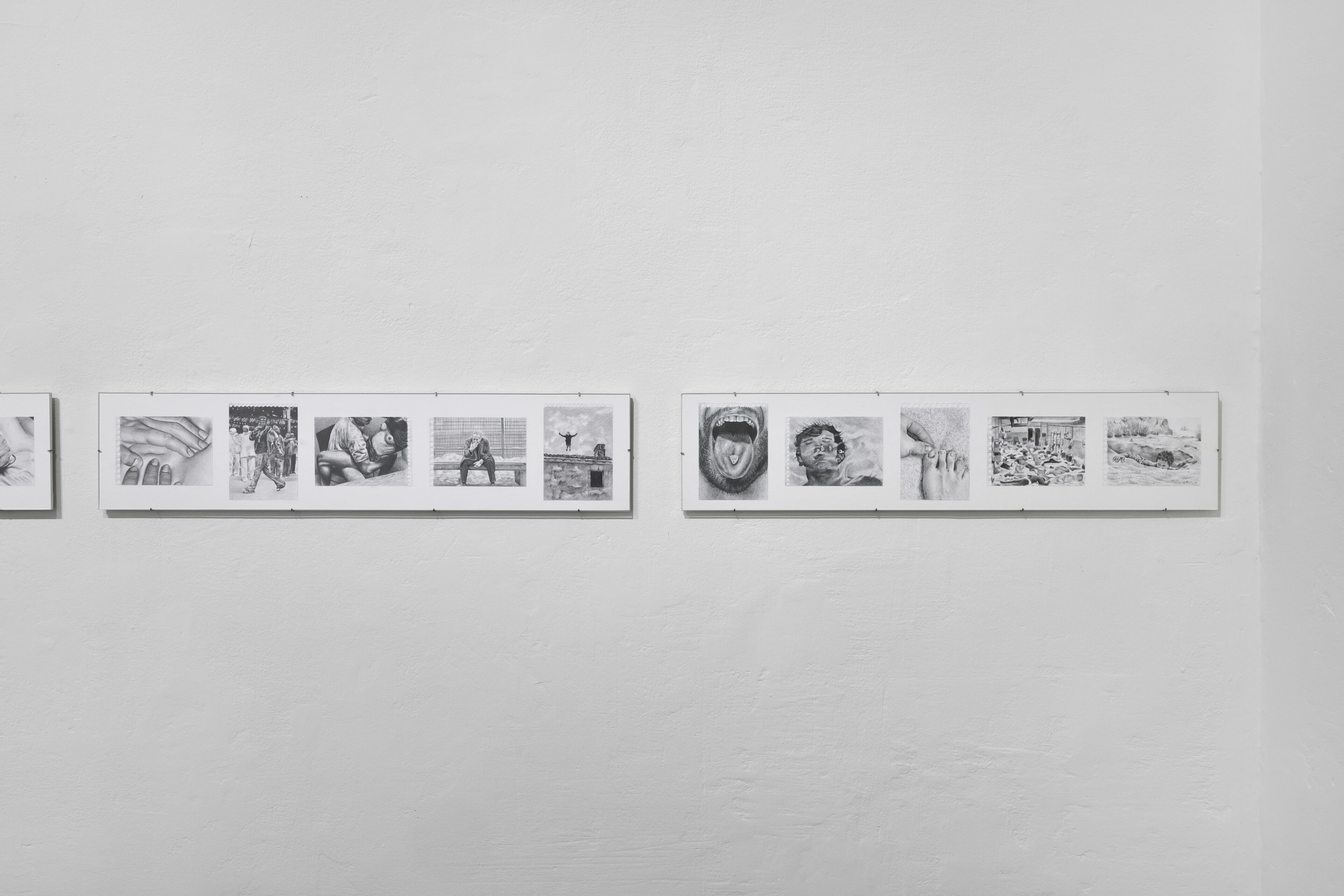
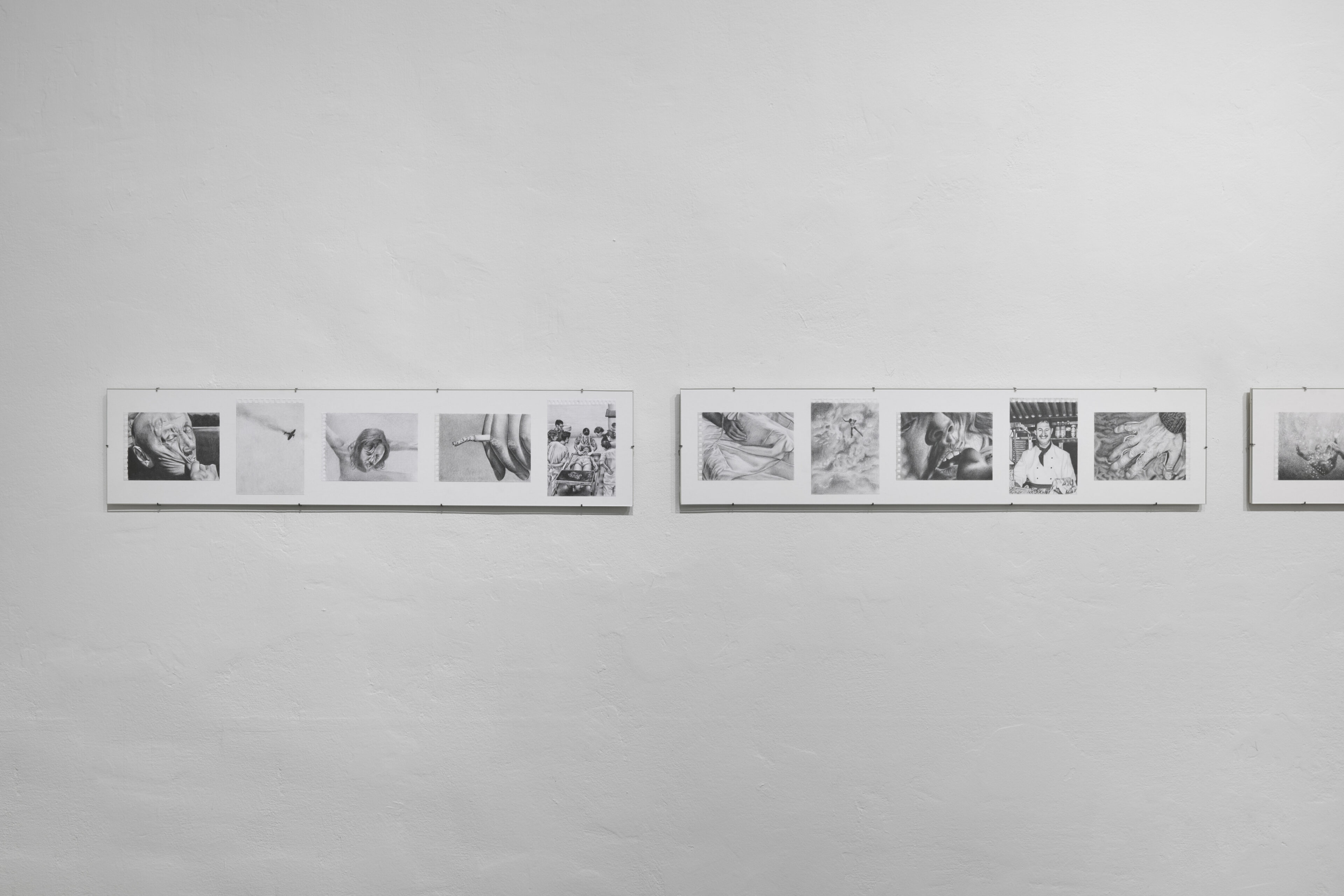
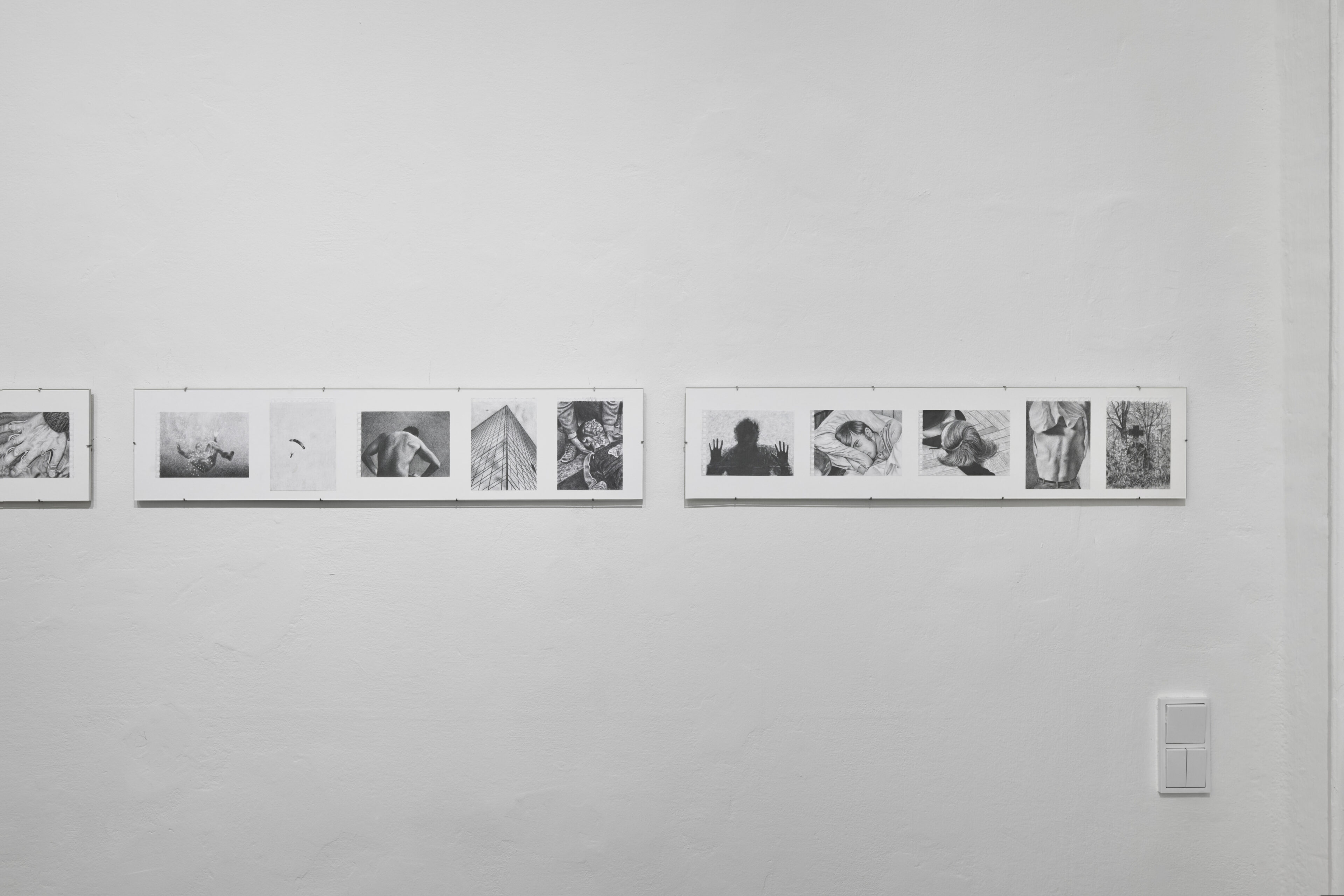
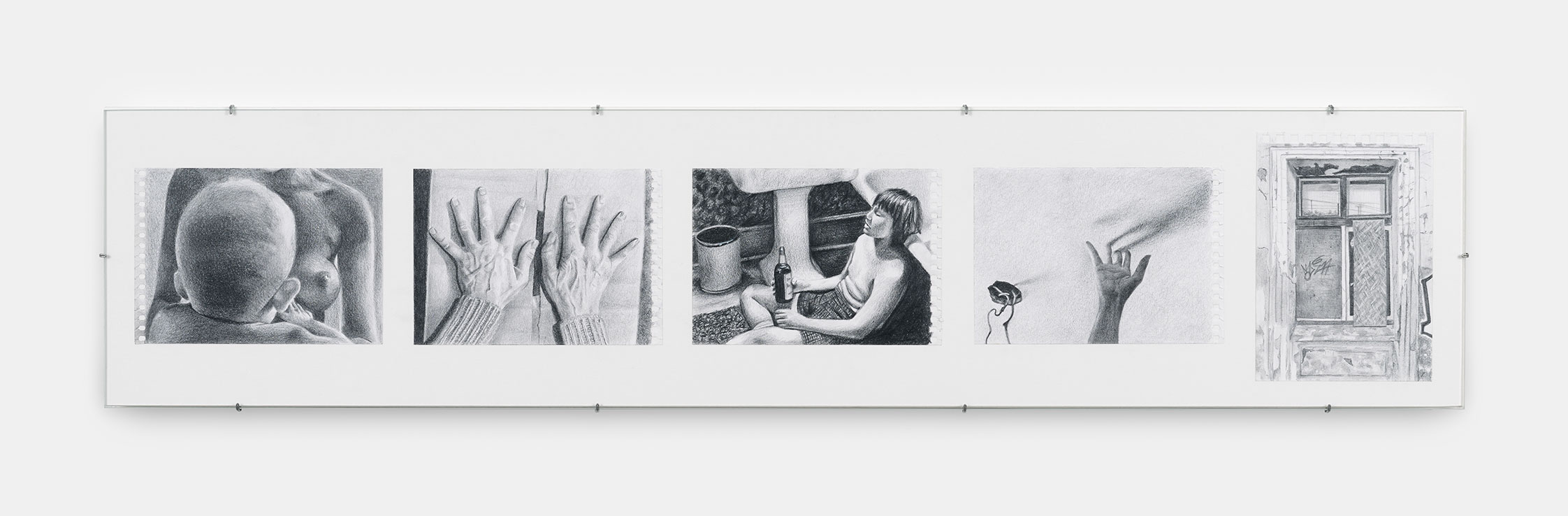
A hand presses into a surface that could be wet sand, could be fur, could be the back of an animal. The fingers are pushed deep enough that the wrist disappears into a knit cuff at the edge of the perforated sheet. Layered from soft pencils, the graphite has been worked into the paper until the tooth closes up, the surface taking on a delicate, breathable density closer to mezzotint than to drawing. The hatching disappears into surface; the mark is not gesture but tone.
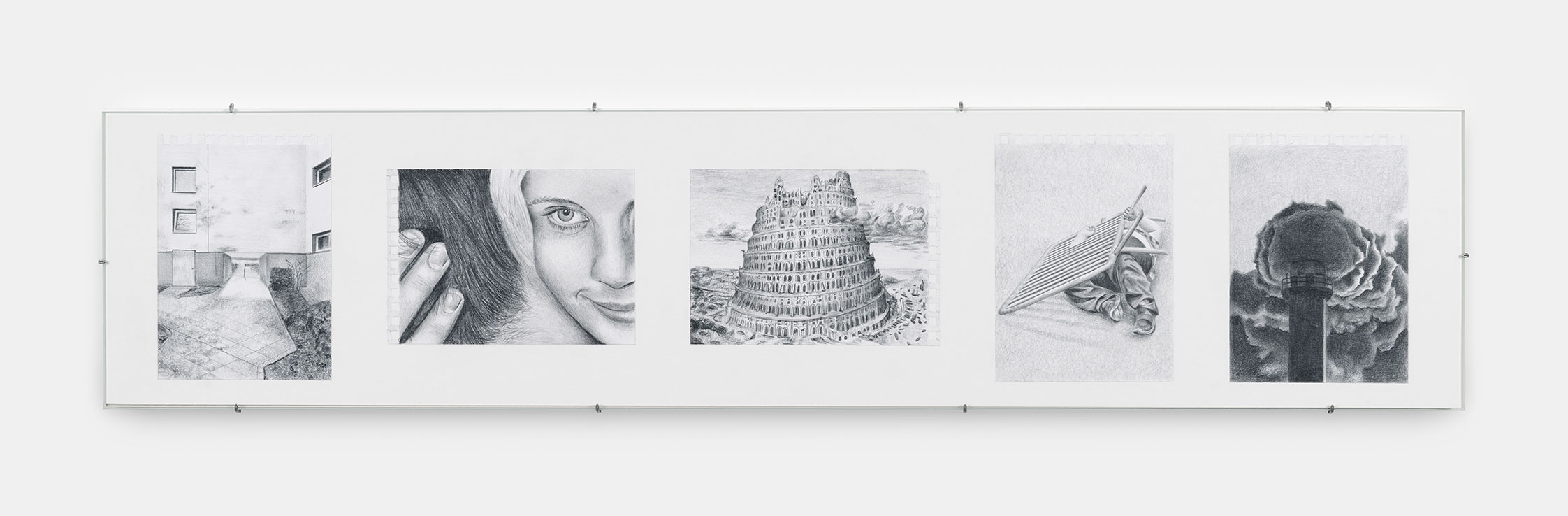
On another sheet a tower rises from a rocky plain, coiling in receding tiers toward a sky banked with cloud. Where the lower storeys are still under construction, the upper levels are already crumbling. It is Bruegel‘s Tower of Babel, copied at the dimensions of a paperback. Yet Bruegel is less quoted than absorbed. Where the original panel measures roughly sixty by seventy-five centimetres, here, on the A6 sheet, the entire architecture of human ambition has been compressed to something a reader could hold in one hand, drawn the way like everything else one had seen. History painting, reduced to the size of a glance.
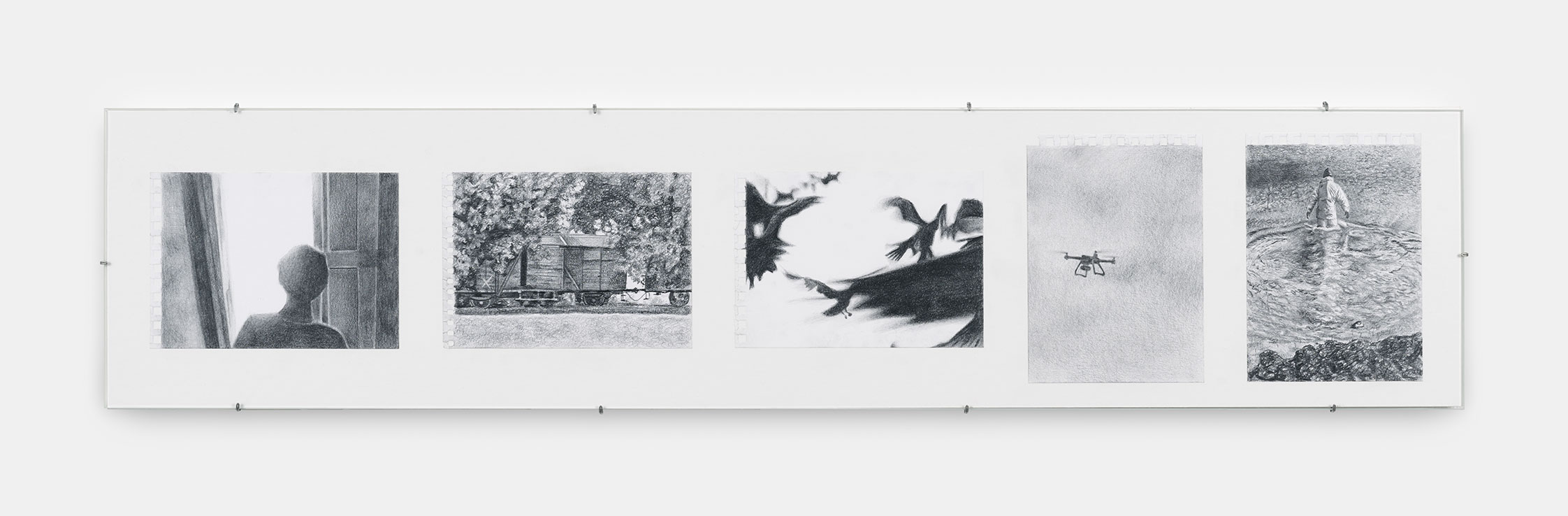
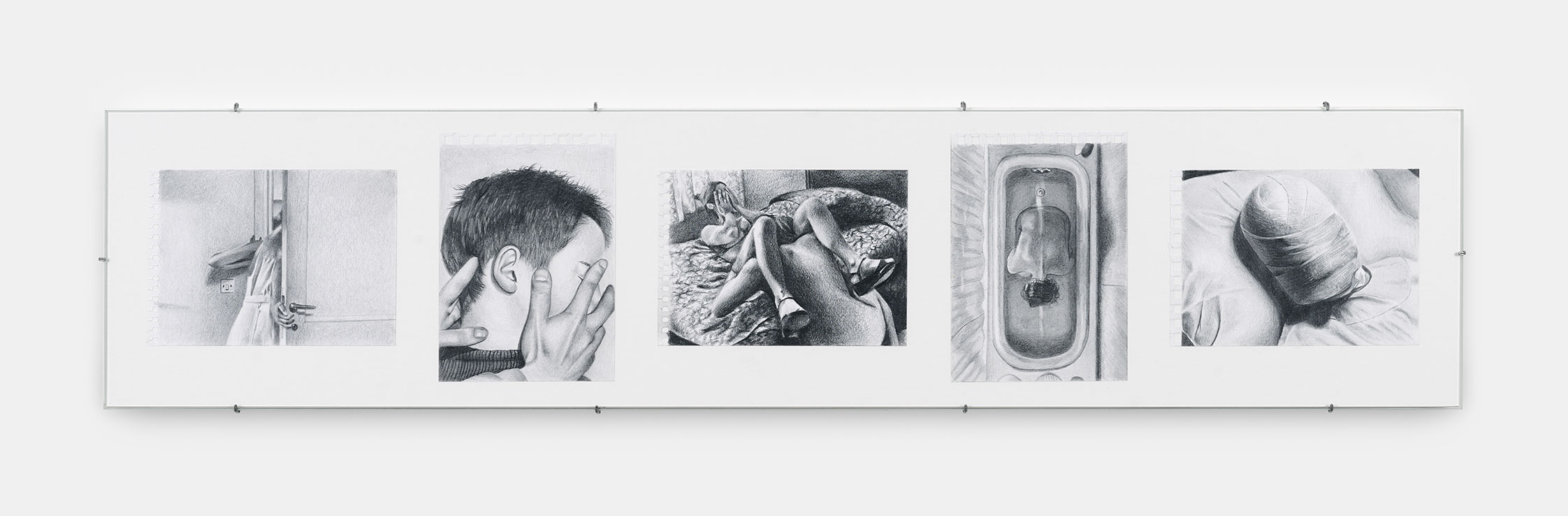
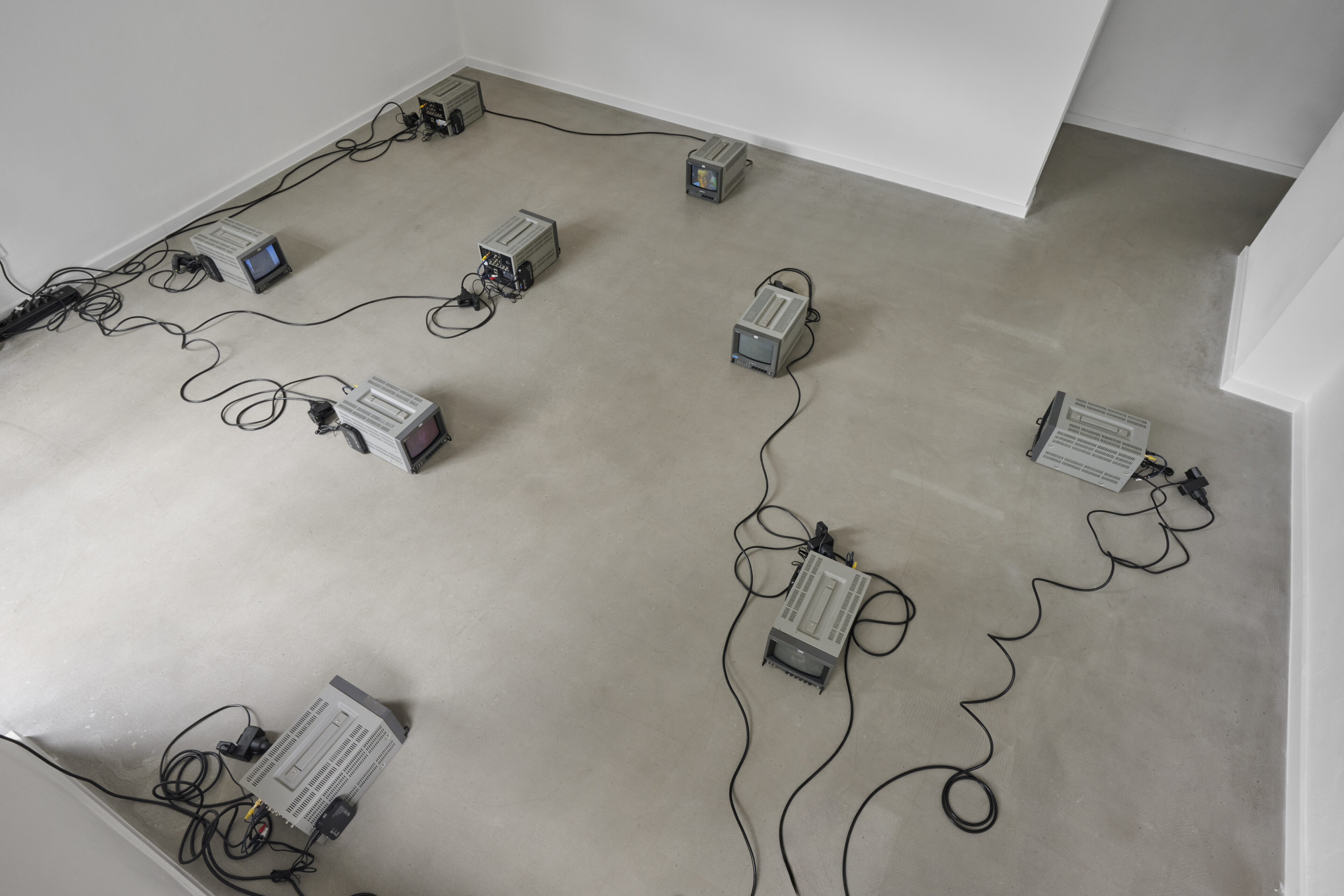
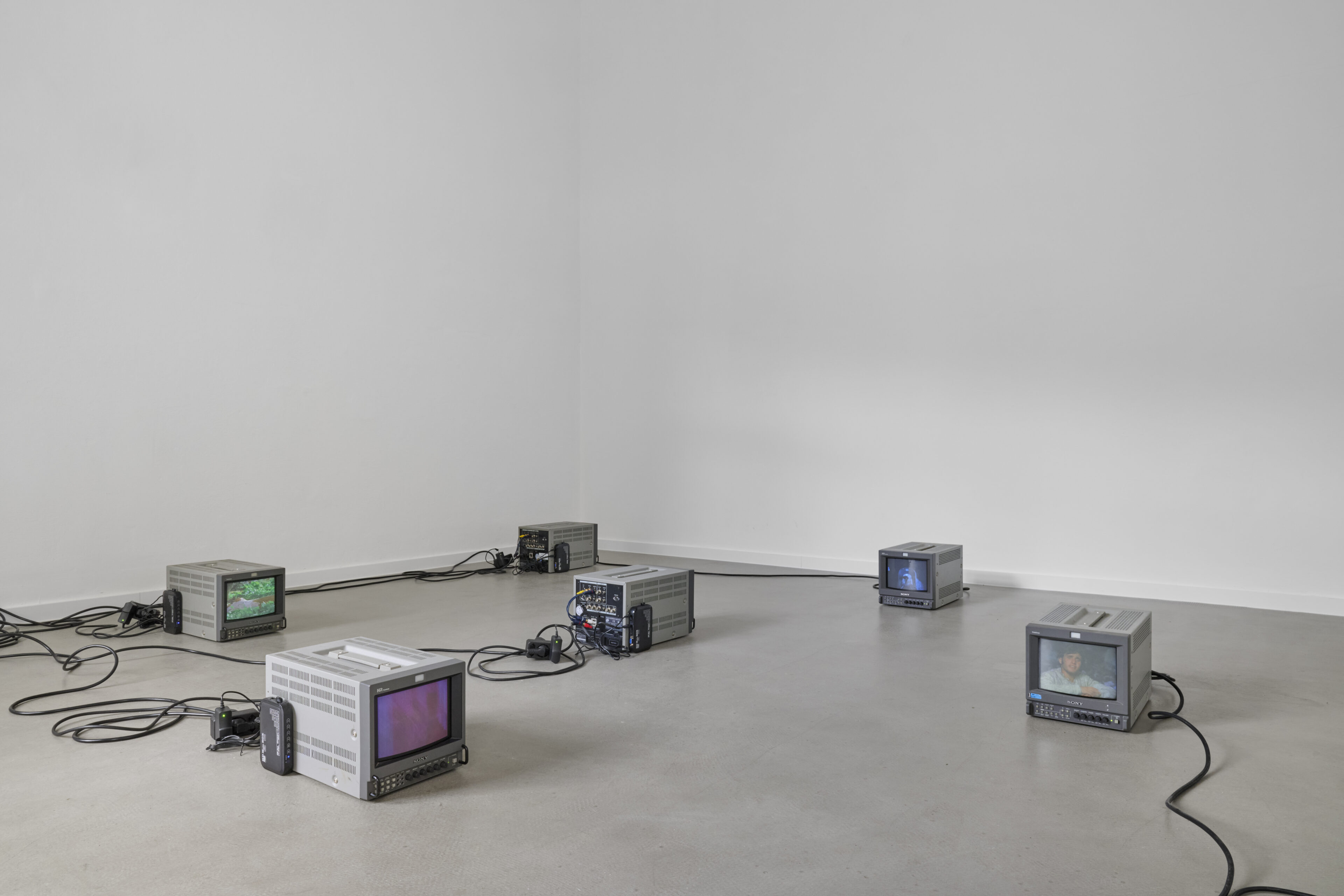
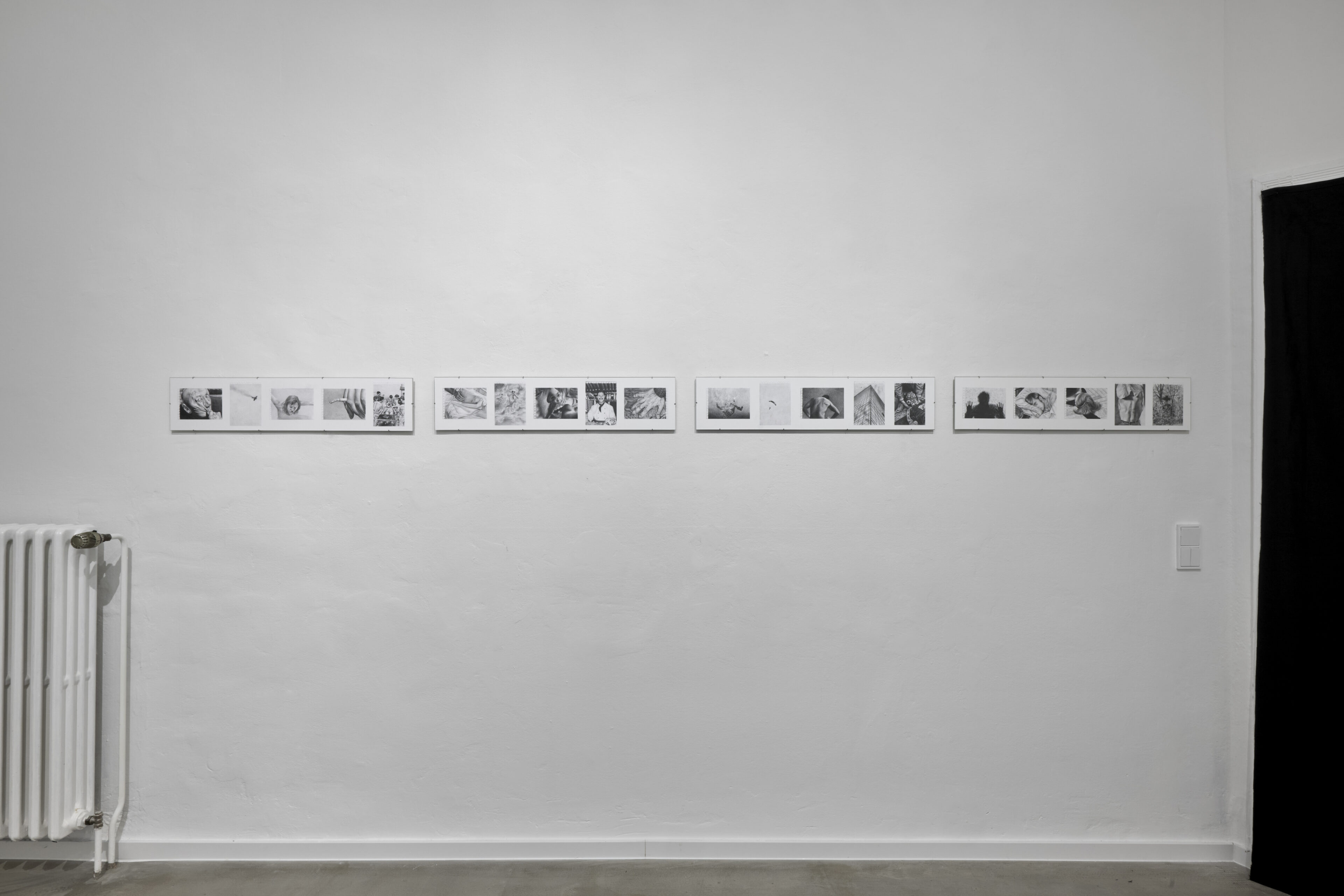
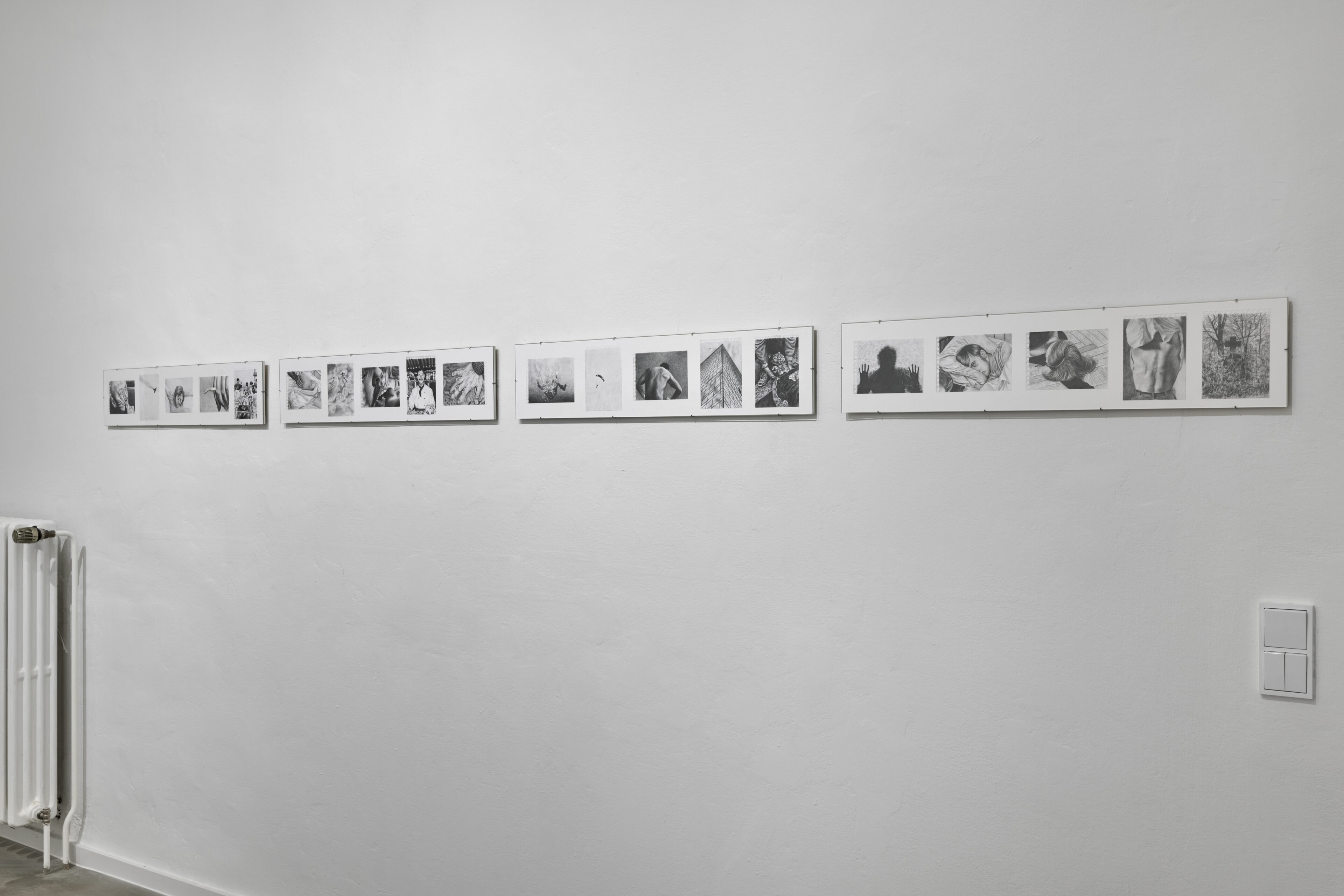
Fifty drawings make up the series of drawings titled Decameron. Each sits on a sheet pulled from the same notebook. Each is rendered with the same dense touch, regardless of what it depicts. To see the drawings the visitor has to walk up close and lean in as if to engage the impossible task to count the innumerable lines that conjure the figure. A young man asleep on a pillow. A figure collapsed on pavement. A rapper mid-stride. A nursing infant. An autopsy. A boarded window. A boxcar under heavy foliage. A burning cigarette. The Tower of Babel. Monument and ephemera occupy the same field of address. The scale of the sheet, hand-sized and uniform, enforces an equivalence that no museum wall could. A kind of salvific realism, nothing is permitted to be larger than anything else.
The exhibition take their title from Pier Paolo Pasolini‘s 1971 adaptation of Boccaccio. In his film, Pasolini cast himself as the pupil of Giotto, sent to Naples to paint a fresco at Santa Chiara. The pupil walks through the city before he begins his task, gathering faces from the alleys to carry up onto the wall. As he puts it: passa per quei luoghi e si imprime nella memoria la faccia di quella gente — buffo come un pagliaccio, con quel suo occhio divino che vede tutto, osservando, e tutto trasforma in qualcosa di fisso e di eterno che vince il tempo. He passes through those places, and the faces of those people are etched into his memory—as comical as a clown, with that divine eye of his that sees everything, observing, and transforming everything into something fixed and eternal that defeats time.
Pujan Karambeigi